
Summer of 2026, and I’m sprawled in a hammock chair on my balcony, the humid evening air carrying the faint salt tang of a nearby bay. A seagull squawks somewhere above, and for a moment I’m back on the deck of a brigantine, the horizon endless and full of promise. That’s the magic of pirate games — they don’t just let you play; they wrap you in a world where freedom smells like gunpowder and rum, and every wave hides a story. I’ve sailed a lot of digital seas over the years, but a few voyages have carved themselves into my soul. Let me tell you about them.
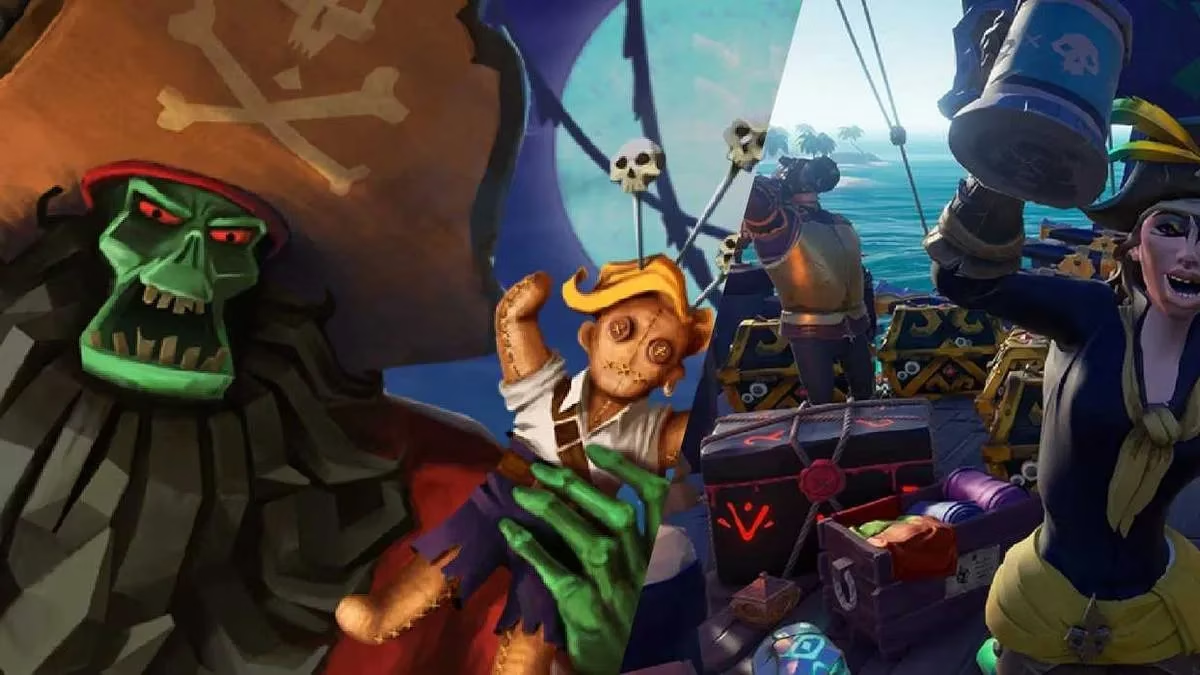
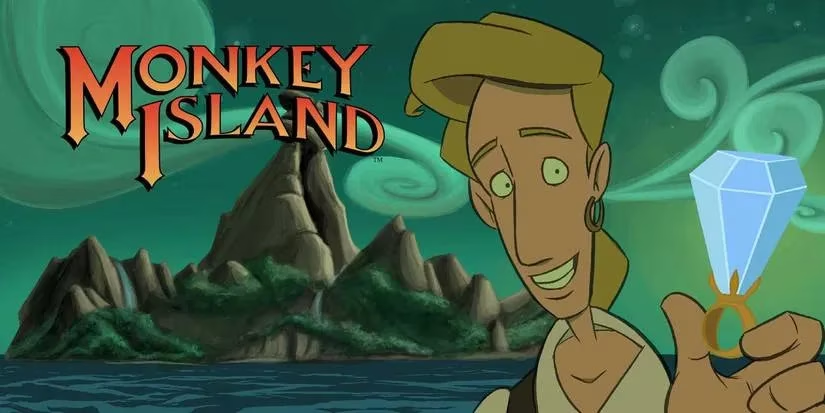
It all started in the dim glow of my dad’s old CRT monitor, with a point-and-click adventure that spoke to me in sarcastic dialogue and ludicrous puzzles. I’m talking about The Curse of Monkey Island, of course. Guybrush Threepwood was no swashbuckling powerhouse — he was a wannabe with a heart full of dreams and pockets full of useless items. But that’s what hooked me. Watching him bumble his way through singing pirates, voodoo curses, and insult sword fights felt like hanging out with an awkward friend who somehow always landed on his feet. I’d lean close to the screen, whispering suggestions as if he could hear me. You know that feeling when a game is so charming you start talking to it? Yeah, Monkey Island did that to me. The cartoonish art style was like a living storybook, and every time a new shanty kicked in, my old speakers seemed to hum with the spirit of the Caribbean. My cat would stare at me, unimpressed, as I laughed at LeChuck’s ghostly schemes. That game taught me pirate stories weren’t just about treasure — they were about heart, humor, and the occasional rubber chicken with a pulley in the middle.
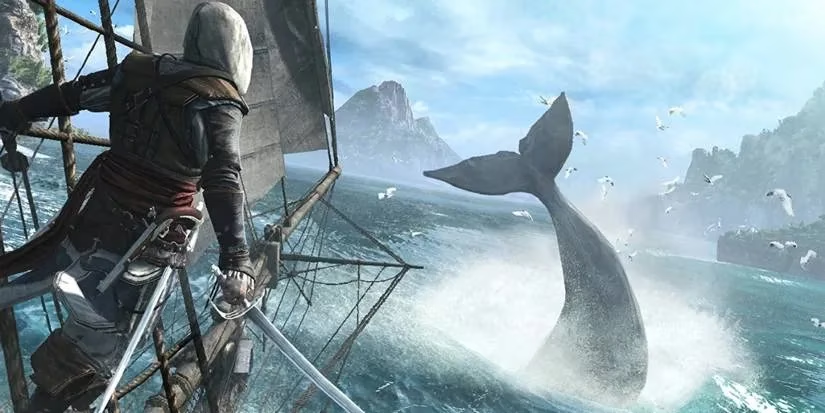
Fast forward a decade, and I’m in a cramped dorm room, the air thick with pizza and ambition. A friend passes me a controller and says, “You have to try this.” That’s how I met Edward Kenway. Assassin’s Creed IV: Black Flag wasn’t just a game — it was a living, breathing ocean. The first time I climbed to the crow’s nest of the Jackdaw and saw the sun rise over an uncharted island, my breath caught. The ship creaked and groaned beneath me like an old friend stretching after a long nap. I’d spend hours doing nothing — nothing important, anyway. Diving for sunken schematics, harpooning sharks, or just drifting while my crew belted out “Leave Her, Johnny.” The sea wasn’t a backdrop; it was a character, moody and magnificent, sometimes calm enough to lull you into a dream, other times roaring with storms that made my controller vibrate like a terrified heartbeat. I mean, come on, who hasn’t wanted to abandon their responsibilities and live on a ship with a bunch of singing pirates? Even now, in 2026, I fire up the remastered version on my VR headset, and the salt spray almost feels real. Almost.
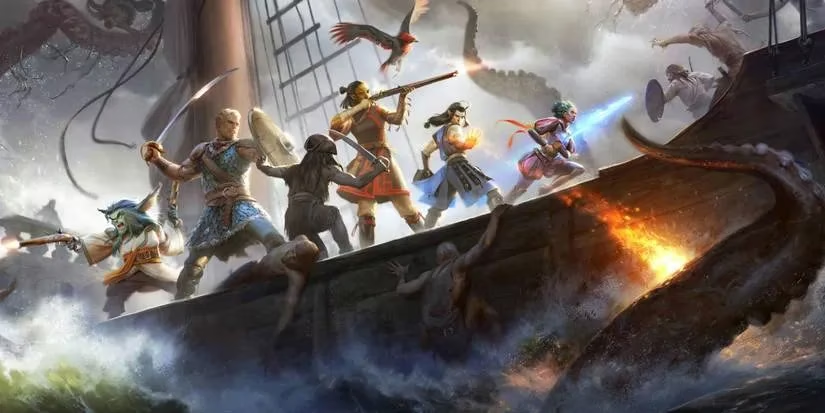
As I grew older and my taste matured, I craved something deeper — a pirate tale with philosophical weight and the quiet menace of gods. That’s when Pillars of Eternity II: Deadfire sailed into my life. Far from the familiar shimmer of the Caribbean, this game dropped me into the volcanic Deadfire Archipelago, where the waters hid monsters and the sky crackled with the power of a reborn deity. I continued the journey of my Watcher from the first game, a soul-scarred hero chasing a runaway god across a chain of islands that felt ancient and alive. The writing was so rich it tasted like dark chocolate. Every companion had secrets, every island a buried sorrow. The sea here wasn’t just adventurous — it was eerie, full of whispers and shadows. I remember a night when a storm hit and the screen was all lightning crashes and churning foam, and my little ship, the Defiant, seemed to groan with determination. “We can make it,” I murmured, and for a second I believed the ship understood. That’s the power of a world built with care — it listens.
Which brings me to the game that still dominates my weekends in 2026: Sea of Thieves. There’s no grand story here, no epic destiny. Just you, a handful of friends, and a badly tuned accordion. And honestly? It’s perfect. Last Saturday, three of us set sail with a single crate of bananas and a vague plan to find treasure. Four hours later, we were screaming through a Kraken’s embrace, one crewmate firing cannons while playing “1812 Overture” on the hurdy-gurdy, another frantically patching holes below deck, and me at the helm, laughing like a maniac. The water physics turn every encounter into a slapstick ballet — one moment you’re gracefully cutting through waves, the next you’re flying through the air because someone launched you out of a cannon. The ship becomes an extension of the crew’s madness; the figurehead seems to grin wider after a narrow escape. Believe it or not, we once detoured through an active volcano just to deliver a single chicken for a merchant alliance quest. The chicken survived. We… did not. But that’s the point. In Sea of Thieves, failure is just another hilarious memory, and the sea embraces your chaos with open arms.
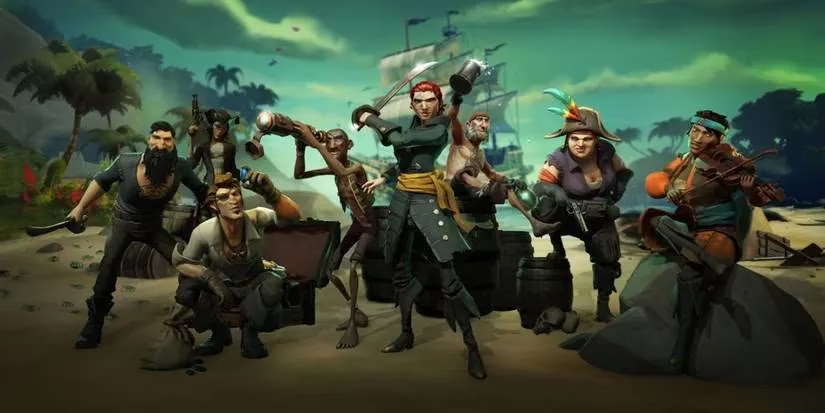
Looking back across all these years and all these pixels, I realize the best pirate games share a heartbeat. Monkey Island gave the genre its laughter, Black Flag its wanderlust, Deadfire its mythic soul, and Sea of Thieves its pure, unfiltered camaraderie. They all promise the same thing: a place where you can be the scallywag you’ve always secretly wanted to be, where rules are suggestions and the horizon is always calling. In 2026, with virtual reality and cloud gaming making those worlds more immersive than ever, I can almost smell the salt, almost hear the creak of the mast. But the real treasure isn’t the graphics or the tech — it’s that timeless feeling of hoisting the anchor and chasing the unknown. Yo ho, yo ho. I think I’ll set sail again tonight.