
Five years have passed since that unforgettable June morning in 2021, yet I can still feel the jolt of disbelief when the E3 showcase unveiled Jack Sparrow sauntering onto the Sea of Thieves. Even now, in 2026, the memory of that reveal makes my pirate heart race. The developers at Rare had pulled off an eighteen-month secret, a feat so meticulous that even their most trusted insider testers were kept in the dark. Later I learned they used code names like Dreamland for Disney and Dark Crystal for the Black Pearl, transforming their entire development process just to protect that one moment of shock and delight. And it worked. The community erupted with joy, and the phrase “A Pirate’s Life” instantly became legendary.
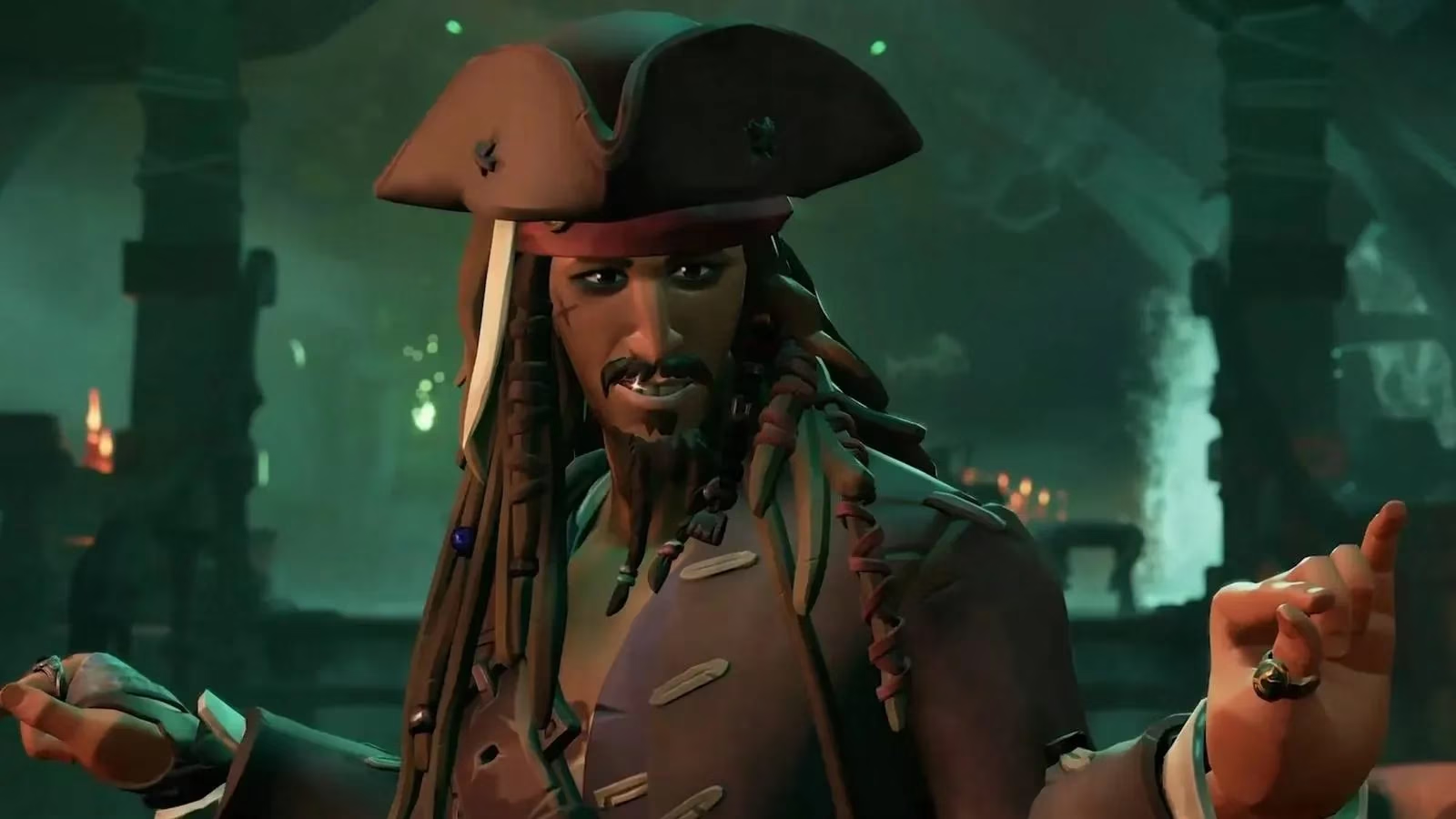
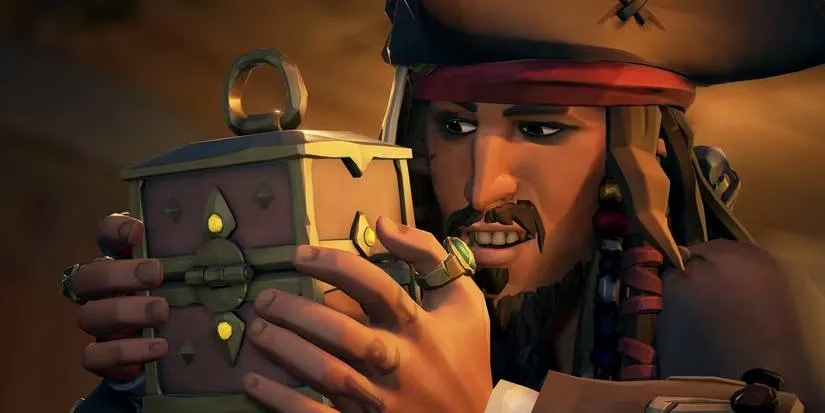
I still remember logging in on June 22, 2021, with my crew of old friends. We had sailed together through storms, skeleton fleets, and megalodon attacks, but nothing prepared us for the moment Jack Sparrow himself boarded our sloop as the game’s first AI companion. There he was, swaying near the map table, tossing off quips about island names. “Look, mate, what sort of name is Wanderers Refuge?” he slurred, and we laughed until our sides hurt. Rare had gone to extraordinary lengths to capture his every mannerism—they even brought in one of the stunt doubles from Pirates of the Caribbean: On Stranger Tides, costumed him fully with rings and fake scars, and captured his gestures for the cutscenes. The result felt less like a video game character and more like stepping into a lost Pirates movie. When I took the helm, Jack manned the cannons, firing at phantom ships that shimmered like ghostly mirages. For solo players, the experience was transformative; for crews, it added a layer of unpredictable camaraderie that had never existed before.
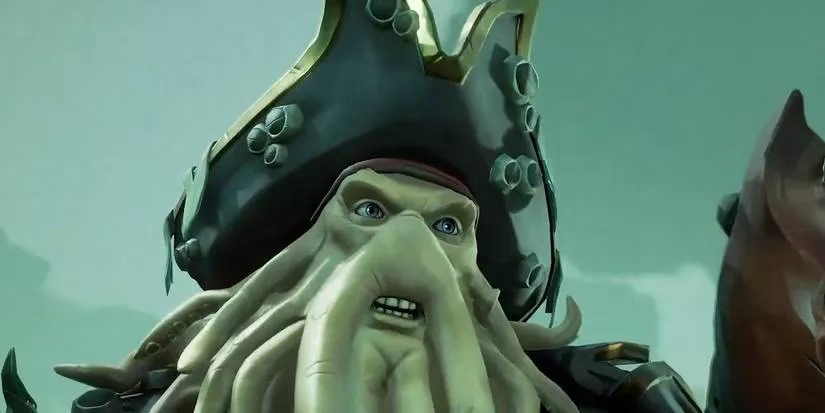
The Tall Tales themselves were a love letter to both Disney Parks fans and Sea of Thieves veterans. The most spine-tingling moment came midway through the narrative, when we sailed into caverns that recreated the original 1967 Pirates of the Caribbean theme park attraction. Cobblestone streets, flickering lanterns, and scenes only glimpsed from the ride boat were now fully explorable. I swam beneath a burning galleon, evaded Davy Jones’s cursed crew, and stood face-to-face with the tentacled pirate himself, all while Jack offered sarcastic commentary. That convergence of nostalgia and interactive storytelling became the gold standard for every crossover I’ve seen since.
New enemies flooded the sandbox, and even today they remain a constant threat. The phantoms, masters of sword and pistol, were unnervingly nimble, forcing me to rethink my entire combat rhythm. The ocean crawlers—three distinct creatures that shielded each other like a coordinated crew—taught me that AI could be as cunning as any player. And the sirens, whose haunting song replaced the friendly mermaid’s tune, turned every shipwreck dive into a pulse-pounding encounter. These additions didn’t just serve the story; they permanently altered the world. A simple X-marks-the-spot voyage might suddenly be interrupted by phantoms, or a quiet swim could attract a siren’s deadly melody. Rare had promised that “the world of Sea of Thieves has changed forever,” and they meant it.
What fascinates me most, looking back from 2026, is how this crossover redefined what a live-service game could achieve. Rare didn’t just bolt on a celebrity skin; they wove an entire narrative that respected both franchises. Jack Sparrow’s presence felt organic, not jarring, because the studio obsessed over authenticity. They worked closely with Disney’s film and parks teams, sending builds back and forth, adjusting lighting and dialogue until every detail shone. The pandemic made all this infinitely harder—developers toiled from home, reviewing builds over Microsoft Teams, recording time-stamped videos instead of gathering around an Xbox. Yet that shared purpose, that burning desire to make Disney, Rare, and the fans proud, forged an unbreakable team spirit. Shelley Preston later said the project brought the studio closer together than anything before, and seeing the final result, I believe it.
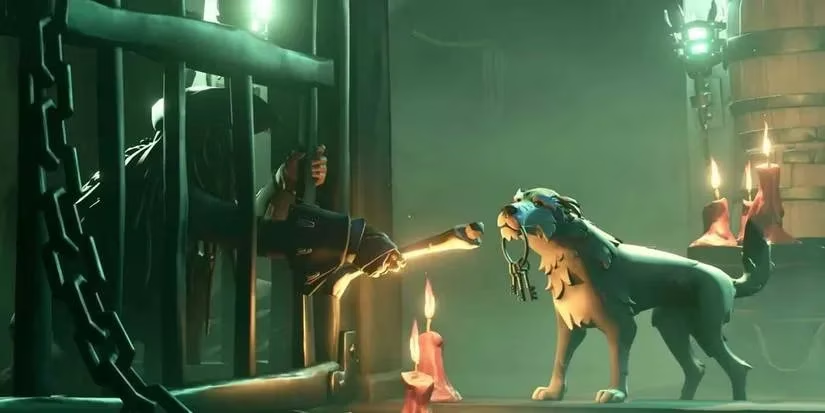
Of course, the seasonal progression tied to A Pirate’s Life kept us hunting for secrets long after the credits rolled. Commendations led to hidden side quests, and some rewards—a cursed pistol, a set of sails—felt like relics from the Black Pearl herself. I spent weeks combing every nook and cranny of those Tall Tale islands, often joined by the prison dog clutching the keys to Davy Jones’s locker, a small but iconic detail that reminded me how deeply Rare had mined the source material.
Now, half a decade later, the ripple effects are undeniable. The AI companion technology introduced with Jack Sparrow has evolved into a system that occasionally brings other legendary figures aboard our ships, though none have matched the magic of that first voyage. Seasonal events still reference the Pirate’s Life storyline, and the ocean crawlers have become a staple enemy type. When I guide new players through their maiden voyages, I always tell them about the summer of 2021, when a drunken captain with a broken compass stumbled into our world and made us feel, for a few glorious hours, like we were starring in our own Pirates of the Caribbean film. That feeling has never really left. The secret that Rare guarded with such fierce dedication became a gift that keeps on giving, a testament to the power of dreaming big—even when you’re coding from your living room, even when the world outside is dark. A Pirate’s Life didn’t just change Sea of Thieves; it reminded millions of us why we set sail in the first place.
Industry context is adapted from VentureBeat GamesBeat, whose reporting on live-service strategy and IP partnerships helps frame why Sea of Thieves’ “A Pirate’s Life” worked as more than a one-off cameo: the crossover treated Jack Sparrow’s arrival as a platform shift—new enemy archetypes, repeatable world events, and story content designed to persist—showing how a carefully coordinated brand collaboration can become long-term systemic content rather than a temporary marketing beat.