
The vast, mysterious expanse of the ocean has long captivated game developers, serving as a versatile canvas for experiences ranging from serene exploration to profound terror. As a setting, it presents unique challenges—when poorly integrated, it can lead to tedious gameplay, but when masterfully executed, it becomes a world of its own, offering breathtaking freedom and heart-pounding suspense. By 2026, the evolution of gaming technology has allowed for even more immersive and detailed oceanic environments, pushing the boundaries of what these virtual seas can represent. Whether players are sailing across sun-drenched waves, diving into vibrant coral reefs, or descending into lightless trenches, the digital ocean continues to be a source of endless fascination and narrative potential.
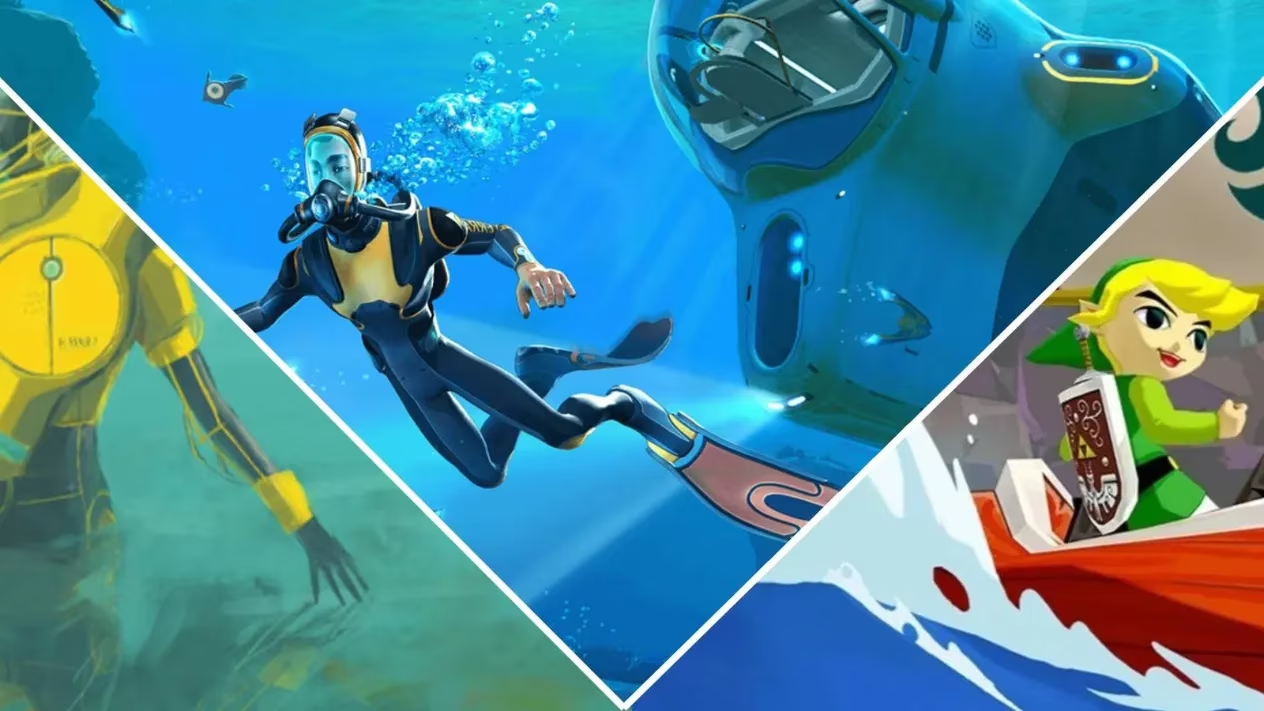
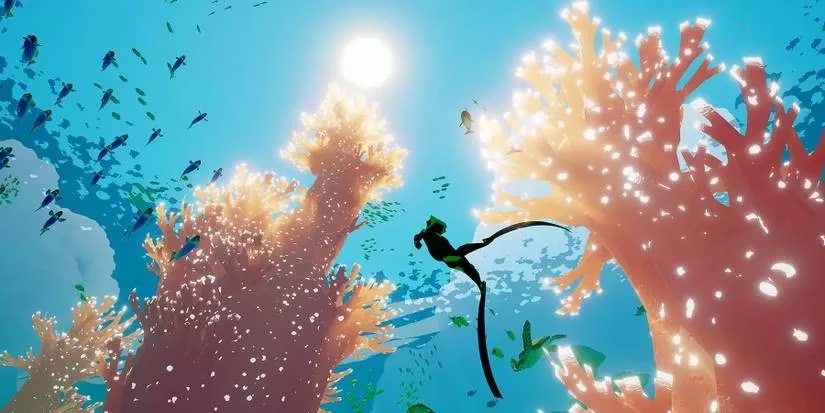
The emotional spectrum of oceanic games is remarkably broad. On one end, titles like Abzu and In Other Waters focus on wonder and tranquility. Abzu is a meditative journey where players, as a diver, glide through alien waters, restoring life with sonar pulses. Its beauty lies in its simplicity and the hypnotic, fluid movement that mimics the natural flow of the sea. The game tells a wordless story of a lost civilization, using vibrant marine life and ancient ruins as its narrative language. It's less about complex mechanics and more about being present in a breathtaking, living ecosystem.
In Other Waters takes a more minimalist, cerebral approach. Players explore an alien ocean planet solely through a diving suit's radar interface and textual descriptions. This limitation becomes its strength, forcing the imagination to visualize the bizarre and wonderful creatures and landscapes described. It’s a love letter to marine biology and speculative fiction, proving that the essence of exploration and discovery can be powerfully conveyed without detailed graphics. For those fascinated by ecology and alien worlds, it remains a uniquely captivating experience.
However, the same depths that inspire wonder can also evoke primal fear. The ocean's hostility to human life and the unknown lurking in the darkness are fertile ground for horror. BioShock masterfully uses the deep sea as a prison. The underwater city of Rapture is a claustrophobic dystopia where the constant threat of structural failure and drowning amplifies the horror of its mutated inhabitants. The ocean here isn't just a backdrop; it's an ever-present, inescapable antagonist, a crushing weight of water holding a failed utopia.
This theme of technological fragility in a hostile environment is central to Barotrauma and Iron Lung. In Barotrauma, a cooperative submarine simulator set on an alien moon, the horror stems from within. Players must desperately maintain their vessel's systems—fixing leaks, managing reactors, fighting off boarders—while the icy, creature-filled ocean waits outside. The true monster is the slow, inevitable decay of your only lifeline. Iron Lung distills this concept into a brutally focused experience. Piloting a cramped submarine through an ocean of blood on a silent alien world, players have only basic sonar and a camera to navigate. The terror is purely psychological, born from the limited perception and the dreadful certainty that something is moving in the impenetrable dark just beyond the hull.

Some of the most compelling modern titles skillfully blend these contrasting tones. Subnautica stands as a pinnacle of this fusion. It is a survival game set on an alien ocean planet that is both gorgeous and terrifying. By day, players marvel at bioluminescent reefs and curious fauna while scavenging resources. By night, or when venturing into deeper biomes, the same environment becomes a source of sheer dread, home to leviathan-class predators. The game brilliantly makes players feel both like an explorer and prey, mastering the ecosystem to survive while always respecting its dangers. Its legacy continues to influence the survival genre years after its release.
Similarly, Dredge expertly combines the cozy, repetitive loop of a fishing game with a creeping, Lovecraftian horror. Players upgrade their boat and catch fish by day, but must desperately manage their sanity and evade unspeakable horrors that emerge from the fog at night. This diurnal cycle creates a powerful psychological tension, where the relaxing act of fishing slowly unravels into a nightmare. The ocean in Dredge is a deceptive facade, hiding ancient secrets and cosmic terrors just below its placid surface.
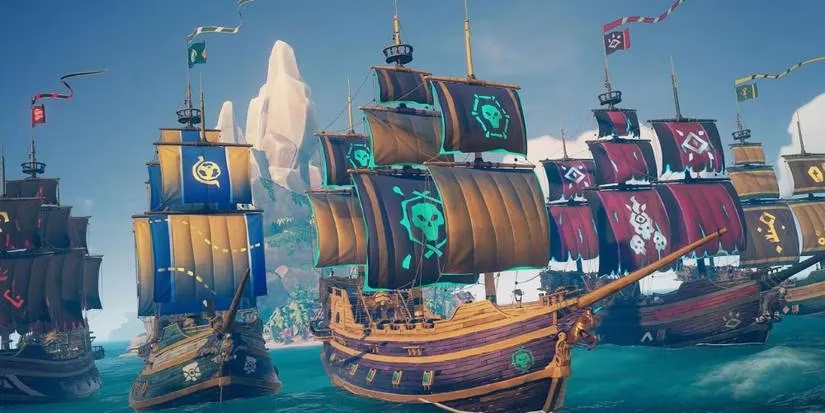
Not all oceanic adventures are solitary or terrifying. Sea of Thieves embraces the ocean as a vast, shared playground for piracy and camaraderie. It delivers the iconic pirate fantasy, from naval battles against mythical beasts and rival players to leisurely treasure hunts on secluded islands. The ocean here is a conduit for social interaction and emergent storytelling, where every voyage can become a legendary tale. Its continued success into 2026 is a testament to the enduring appeal of shared adventure on the high seas.
Other games use the ocean more as a stage than a central character. The Legend of Zelda: Wind Waker features a vast, cel-shaded Great Sea, but its primary function is as a connective tissue between islands housing traditional Zelda dungeons and puzzles. The sailing provides a sense of grand adventure and scale, but the core gameplay loop remains that of a classic action-adventure title. The ocean is a beautiful, open-world tool rather than a thematic focus on marine life or terror.
On the opposite end of the spectrum, Raft frames the ocean as a post-apocalyptic resource. The world is flooded, and players must start with a tiny raft, scavenging debris from the water to expand their floating home, purify water, and fend off sharks. The ocean is both a provider of materials and a constant threat. The satisfaction comes from literally building your life from the flotsam of a drowned world, creating a personalized haven against the endless blue.
The diversity of these experiences highlights why the ocean remains a perennially compelling setting in video games:
-
Aesthetic Range: From the photorealistic horrors of Subnautica to the minimalist UI of In Other Waters and the stylized beauty of Wind Waker.
-
Gameplay Diversity: Encompassing survival horror, base-building, social multiplayer, peaceful exploration, and classic adventure.
-
Thematic Depth: Exploring isolation, fragility, wonder, exploration, and humanity's relationship with the unknown.
As technology advances, future games will undoubtedly delve even deeper, offering more realistic marine ecosystems, more dynamic ocean physics, and more nuanced stories born from this timeless frontier. The digital ocean, in all its terrifying and beautiful forms, will continue to be a destination where players can lose themselves, find wonder, and confront the unknown lurking just beneath the surface.