
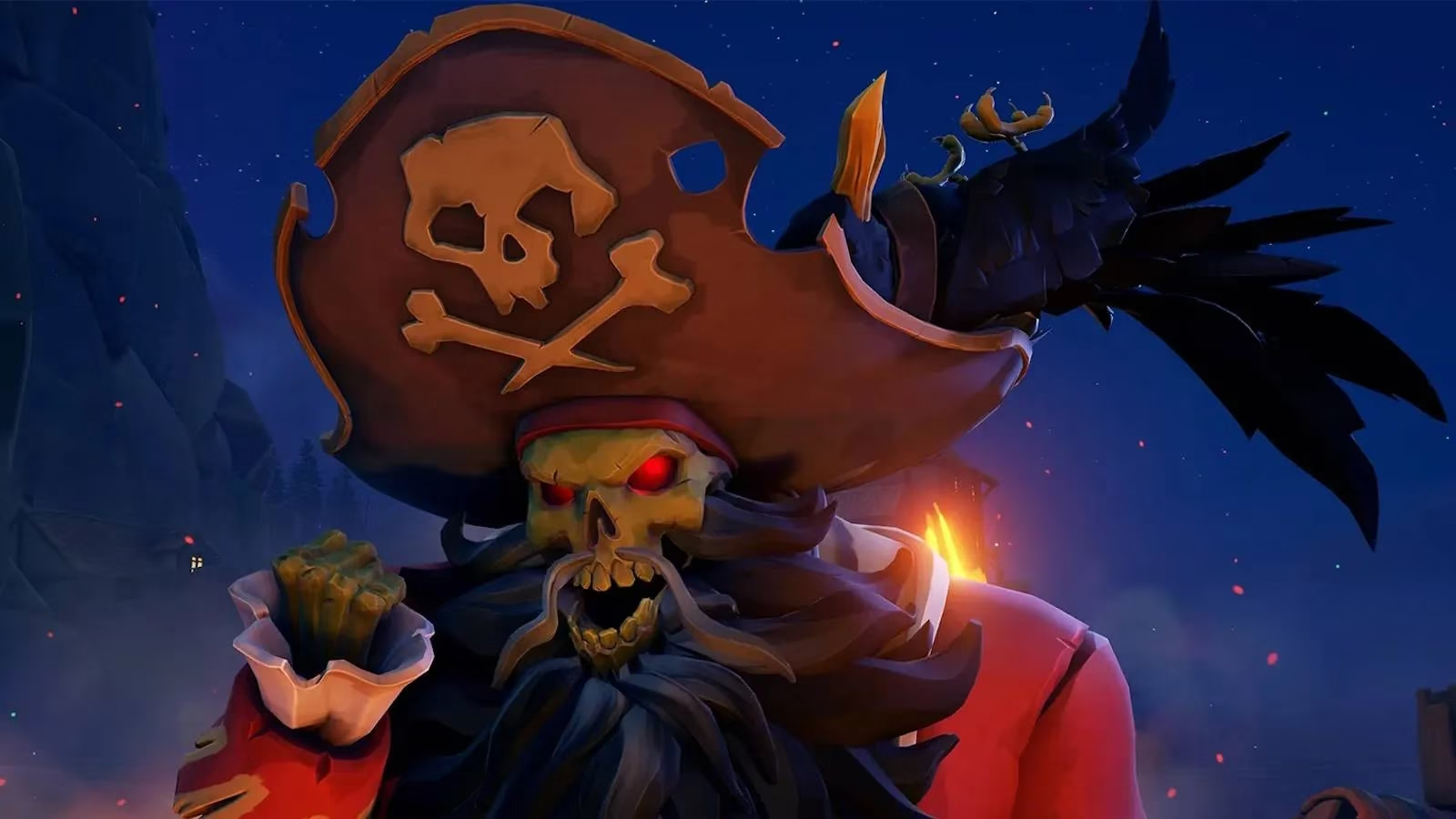
As a longtime fan of both the Monkey Island series and Sea of Thieves, I was thrilled to see their worlds collide in the Xbox Games Showcase announcement. The image of a weathered Guybrush Threepwood and the ghostly LeChuck in the Sea of Thieves art style was instantly captivating. However, the excitement was tinged with a surprising revelation that emerged shortly after: Ron Gilbert, the original creator of Monkey Island, was completely unaware this crossover was happening until he saw the public announcement, just like the rest of us. This detail adds a complex layer to what should have been a purely celebratory moment for fans of these iconic seafaring franchises. It highlights the sometimes-awkward relationship between a creator's legacy and the corporate ownership of intellectual property.
Let's rewind a bit. The Monkey Island series, a cornerstone of the point-and-click adventure genre, began its journey in 1990 with The Secret of Monkey Island. 🏝️ Crafted by Ron Gilbert, the game was a masterpiece of humor, puzzle design, and charming characters. Its success spawned a beloved series. In a wonderful full-circle moment, Gilbert returned to helm Return to Monkey Island in 2022, a game that was warmly received by the community. It felt like a proper, creator-led conclusion to Guybrush Threepwood's long-running saga. So, when news broke of a new Monkey Island adventure within the shared-world of Sea of Thieves, many, including myself, naturally assumed Gilbert was involved in some capacity.
The truth, as revealed on a game development Mastodon server, was quite different. When a user excitedly asked Gilbert if he was involved in the upcoming Sea of Thieves: The Legend of Monkey Island campaign, his response was blunt: "Nope. Wasn't even told about it. Happened behind my back." This single sentence sent ripples through the fan community. The reaction online was a mix of shock 😲 and sympathy. One user perfectly captured the surreal nature of it, asking Gilbert, "Wow…so you found out today like the rest of us?"
It's crucial to understand the legal backdrop here. Lucasfilm (and by extension, its parent company) holds the rights to the Monkey Island intellectual property. Legally, they are under no obligation to consult Ron Gilbert for derivative works or crossovers. They own the ship, even if Gilbert designed its original blueprint. This is a common reality in the games industry, where creative ownership and corporate ownership often diverge. However, knowing this doesn't erase the emotional impact. For many, Ron Gilbert is Monkey Island. His unique comedic voice and design philosophy defined the series. To see a new chapter announced without his knowledge feels, to put it mildly, disrespectful to the legacy he built.
Delving into the crossover itself, the content looks fantastic. Launching back in July 2023, The Legend of Monkey Island was a three-part Tall Tale that transported players to iconic locations like Mêlée Island. The premise was classic Monkey Island: a down-on-his-luck Governor Guybrush Threepwood needs help to thwart the latest scheme of his eternal nemesis, the undead pirate LeChuck. The crossover was cleverly positioned in an alternate timeline, separate from the events of Return to Monkey Island. This narrative device likely helped sidestep potential continuity conflicts and may have been one reason Lucasfilm felt comfortable proceeding without Gilbert's direct input.
| Aspect | Detail |
|---|---|
| Crossover Title | Sea of Thieves: The Legend of Monkey Island |
| Release Date | July 20, 2023 |
| Format | Three-part Tall Tale campaign |
| Main Characters | Guybrush Threepwood, LeChuck |
| Key Location | Mêlée Island & surrounding seas |
Reflecting on this from my perspective as a player in 2026, the episode remains a fascinating case study. The crossover itself was a critical and commercial success, praised for its faithful adaptation of Monkey Island's tone and puzzles into Sea of Thieves' framework. Yet, the shadow of Gilbert's surprise lingers. It raises important questions about creative acknowledgment in an industry increasingly driven by legacy IP and live-service games. With Sea of Thieves having laid out ambitious content plans for years, one hopes that future collaborations are handled with more transparency and inclusion for the original creators.
Ultimately, the situation presents a duality. On one hand, we got an incredibly fun and loving tribute to Monkey Island that introduced the series to a whole new audience. Playing through those Tall Tales, solving the witty puzzles, and hearing the familiar musical themes was an absolute joy. On the other hand, it's a reminder that the stories we love can sometimes travel paths their original authors never envisioned or were even aware of. The legacy of Monkey Island sails on, but for Ron Gilbert, seeing this particular ship leave port must have been a uniquely bittersweet experience. As fans, we can appreciate the final product while also wishing the journey to its creation had been more inclusive of the visionary who started it all.