
In the world of gaming, few things are as sweet as a slow-burn success story. Sea of Thieves, Rare’s shared-world pirate adventure, is exactly that. Back in January 2020, Microsoft proudly announced that the game had officially been played by over ten million players, making it the most successful new IP for Xbox that generation. Joe Neate, executive producer at Rare, didn’t mince words: “For everyone at Rare, the Sea of Thieves community represents the very best of what gaming can be.” Fast forward to 2026, and that community has grown into a full-blown armada, with players from more than eighty countries—and then some—sailing together on Xbox Game Pass, Xbox One, Windows 10 PC, and now PlayStation 5, cloud, and beyond.
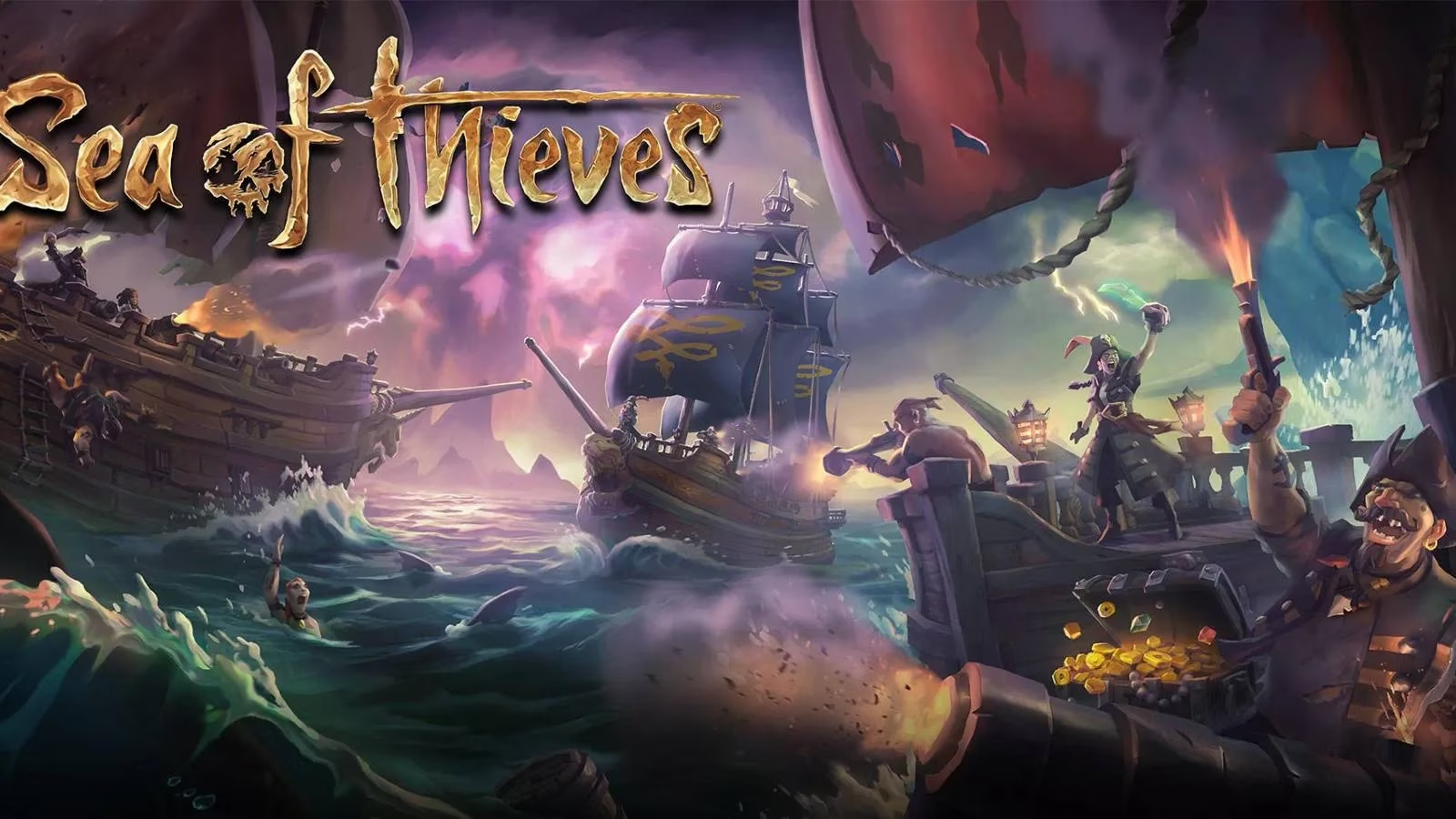
The January 2020 “Legends of the Seas” update was a freebie for all players, and anyone who logged in between January 15 and 22 snagged two limited-edition gifts: a custom sail and a new emote. It was a small token, but it paid tribute to one of the core reasons the game took off in the first place: cosmetics. Cosmetic customization has become the name of the game over the past decade. Fortnite is the poster child, but Sea of Thieves has its own treasure chest of skins, ship liveries, pets, and emotes. For completionists, it’s a never-ending voyage.
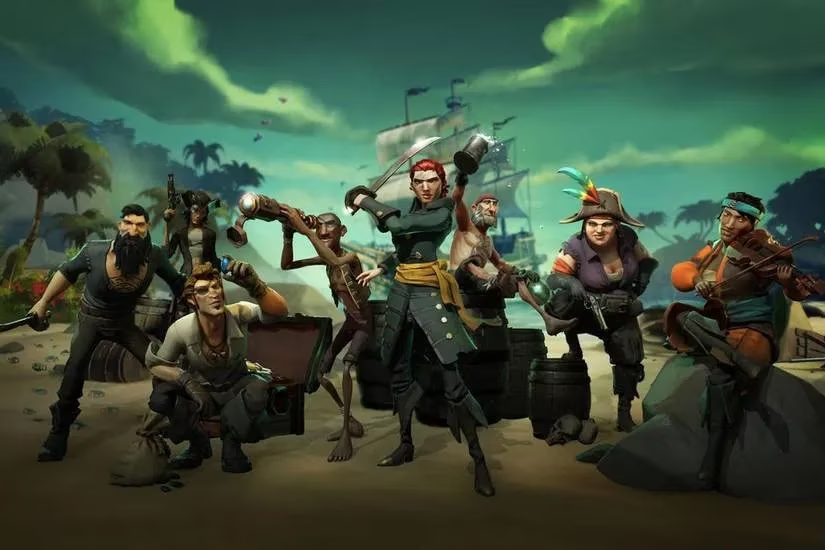
The game’s real turning point, though, came on April 30, 2019. Before that, some critics called it a beautiful but pointless sandbox. Then came Tall Tales, Hunter’s Call, and The Arena. Tall Tales added narrative quests that gave players a story to follow. Hunter’s Call introduced fishing, hunting, and cooking. The Arena let crews jump straight into competitive PvP to prove who was the saltiest sea dog. The sandbox didn’t disappear—it just got a lot more toys.
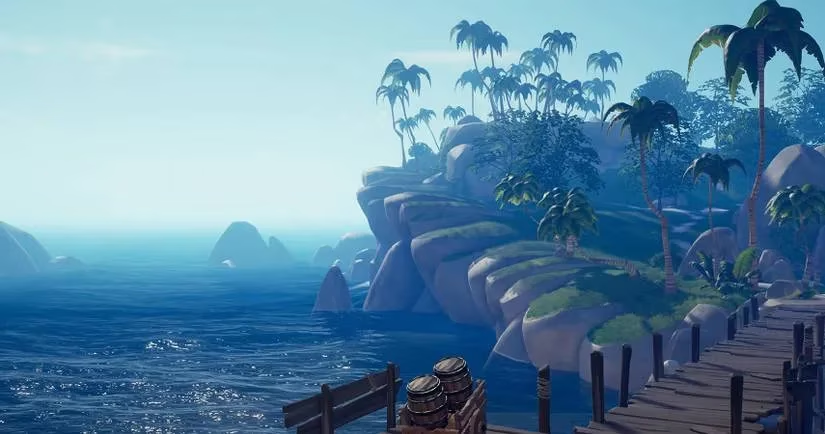
Players can still sail solo or with friends, which means the game can be a relaxing fishing trip, a chaotic PvP brawl, or a story-driven adventure. That flexibility is a big part of why Sea of Thieves has stayed afloat while other live-service games walked the plank. By 2026, Rare has continued to expand the horizon. Seasons, the Pirates of the Caribbean crossover “A Pirate’s Life,” captaincy, Safer Seas, and the PlayStation 5 launch have all kept the ship sailing. The game is now a cross-platform juggernaut, not just an Xbox exclusive.
Here’s a quick look at how the voyage has gone:
| Year | Milestone |
|---|---|
| 2018 | Sea of Thieves launches on Xbox One and PC |
| 2019 | Tall Tales, Hunter’s Call, and The Arena arrive |
| 2020 | 10 million players; “Legends of the Seas” update |
| 2021 | “A Pirate’s Life” crossover with Pirates of the Caribbean |
| 2023 | Safer Seas mode gives solo players a gentler option |
| 2024 | PlayStation 5 version launches |
| 2026 | Still going strong with active seasons and community events |
So why did Sea of Thieves succeed when so many other games sink? It wasn’t an overnight sensation. It was a long-term evolution. Rare listened to its community, added meaningful content, and let players write their own pirate legends. Whether you’re a solo sloop or a galleon full of friends, there’s always another horizon. And with over ten million players turning into tens of millions more by 2026, the Sea of Thieves community is proof that sometimes the best treasures are the ones you find together. ⚓🏴☠️🗺️