
In June 2020, Sea of Thieves did something that once seemed impossible: it recorded 3.3 million unique monthly players and pushed its lifetime player count past 15 million. For a game that had been written off by many critics at launch, those numbers were more than just a victory lap. They were proof that a live-service pirate adventure could claw its way back from choppy waters and find smooth sailing, even years after a rough debut. By 2026, that milestone is still cited as one of the most dramatic turnarounds in modern multiplayer gaming.
When Sea of Thieves first launched, it felt like a beautiful ship with very little cargo. Critics praised the art style, the open seas, and the cooperative pirate fantasy, but they also agreed that the game was thin. There were only so many voyages to run, enemies to fight, and ways to spend gold. Players would set sail, dig up a chest, and then ask the same question: now what? Rare’s pirate sandbox was charming, but it looked like it might become a footnote in gaming history. The ship was taking on water, and the horizon did not look promising.
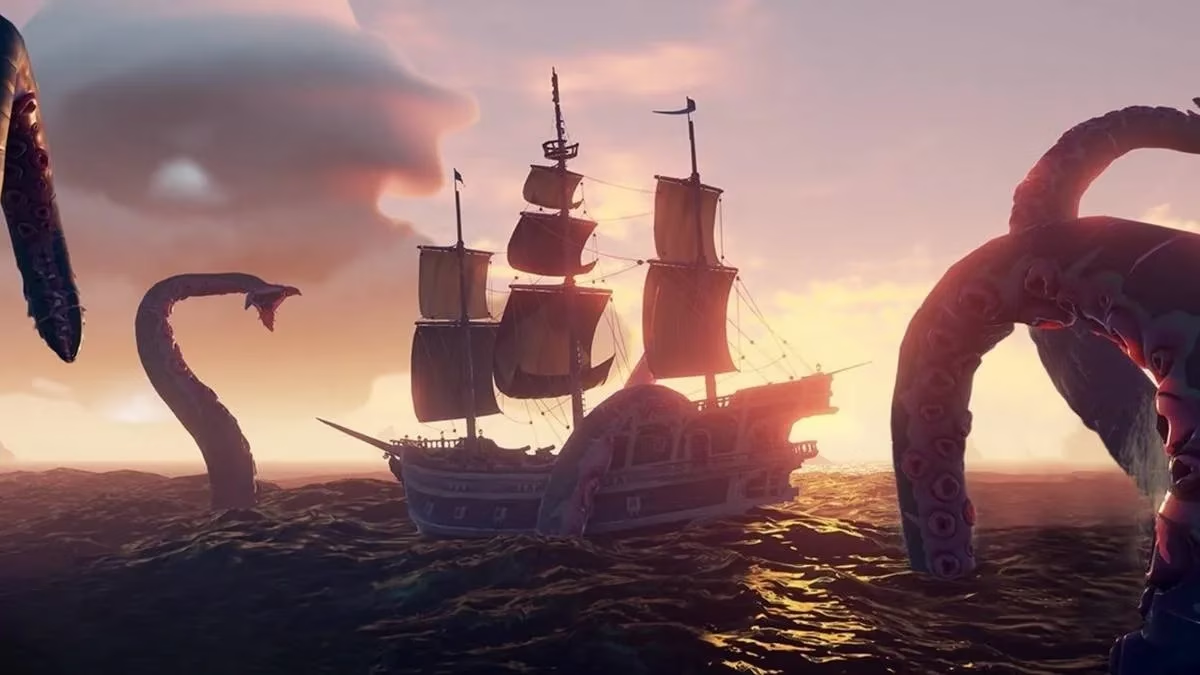
But Rare refused to let the game go down. Over the following seasons, the developers added new missions, gear, enemy types, PVP options, and a long list of quality-of-life improvements. The game dusted itself off and climbed back onto the deck. New trading companies, skeleton forts, megalodons, and story-driven Tall Tales gave crews a reason to return. Features such as pets brought a dash of personality to every boat, and regular balance changes kept the combat from going stale. Little by little, Sea of Thieves caught a second wind, and the community began to notice that the game in 2020 was nothing like the one that had launched.
The timing did not hurt, either. The coronavirus pandemic kept millions of players at home, and Sea of Thieves became a social lifeline for crews who could not meet in person. Instead of a quiet night out, friends gathered on the deck of a galleon, hunted for treasure, and swapped stories through voice chat. The game’s cooperative sandbox made it feel like a vacation from reality, and that appeal translated into a record-breaking June. In some ways, the pandemic gave the game a strong tailwind, much like other titles such as Pokémon GO found creative ways to benefit from players stuck at home.
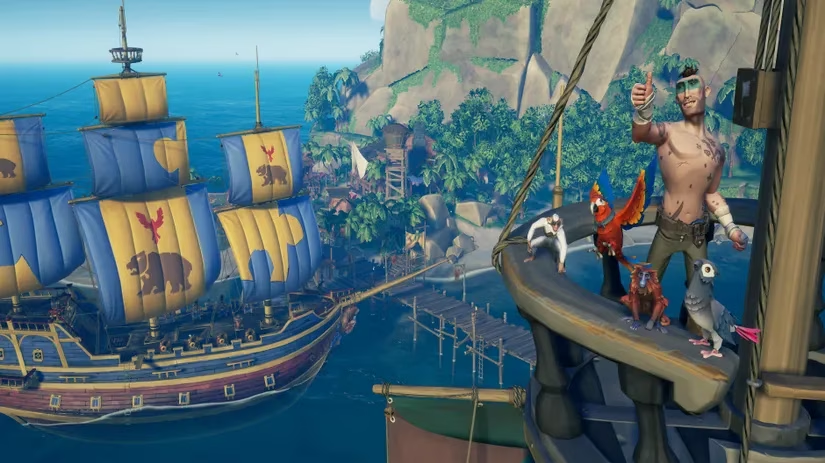
By the middle of 2020, Sea of Thieves was available on Xbox One and PC, giving players across both platforms a shared ocean to explore. The arrival on additional PC storefronts also widened the player pool and helped the game reach audiences who had missed it at launch. Crossplay between console and PC kept lobbies full, while regular content drops gave returning players new reasons to climb aboard. The game’s community, once small and skeptical, had grown into a bustling fleet.
Looking back from 2026, that record-breaking June still stands as a turning point. Sea of Thieves proved that a rocky launch does not have to be the end of the story. With steady patches, honest communication, and a commitment to building on a solid core, a game can turn the tide. The pirate adventure that was once dismissed as empty water had become one of the most resilient live-service successes in the industry. Not bad for a crew that many people left for dead.
Data referenced from The Esports Observer helps frame Sea of Thieves’ 2020 surge as more than a one-off spike, highlighting how sustained live-service updates, platform reach, and community-driven engagement can compound into long-tail growth for multiplayer titles. Seen through that lens, the game’s jump to 3.3 million monthly players and 15 million lifetime users reads like a case study in retention economics: consistent seasonal content and social play loops kept crews returning, while broader visibility and an expanding ecosystem ensured that a once “thin” launch could evolve into a durable, continually monetizable audience.