
In the summer of 2020, a strange current carried Rare's pirate sandbox into open water. Sea of Thieves reached 15 million total players, a number that seemed improbable two years earlier when the game launched into headwinds of criticism. The title had arrived simultaneously on retail shelves and Xbox Game Pass, making it one of the first major first-party releases to test that distribution current. At launch, the world shimmered, but many sailors found the horizon empty. Rare had shipped a galleon with a hole beneath the waterline, and only a long patchwork of updates could keep the bilge from rising.
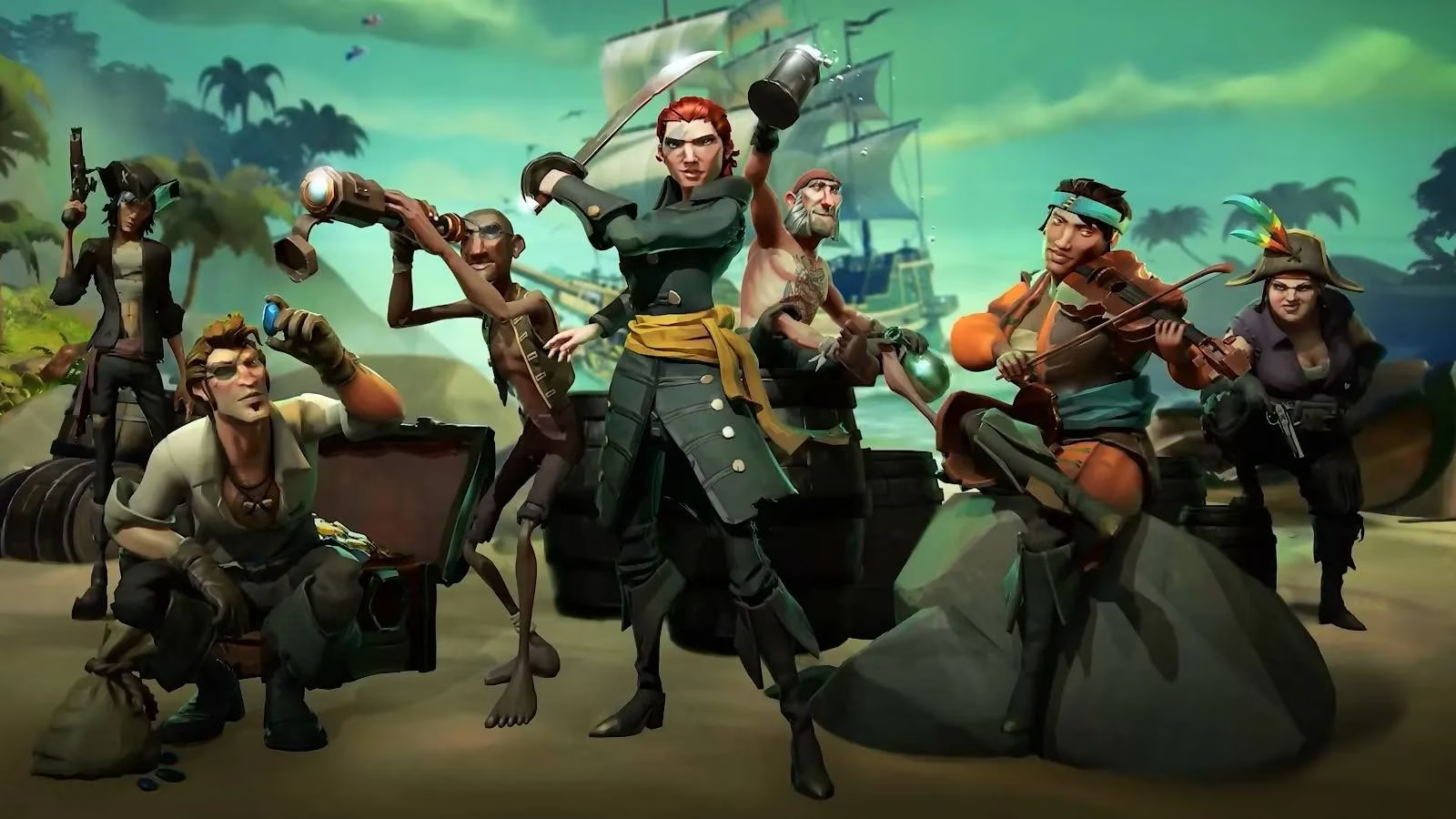
Rare's journey to that moment had been a slow tack against the wind. Microsoft bought the studio in 2002, then spent years pointing its compass toward Kinect projects. The pirate IP was meant to be a return to form, and perhaps a signal fire for a studio that had once defined its era. The 15 million milestone felt like a flare finally visible above the fog.
The growth did not come as a trickle. In 2020 alone, Sea of Thieves added five million players, already eclipsing what the game had gained across all of 2019. Joe Neate, writing on Xbox Wire, noted that June 2020 was the biggest month since launch: 3.3 million new pirates logged in during those thirty days. That same month, the game launched on Steam and sold more than one million copies. The update cadence had become less a trickle and more a tide chart, with each content drop raising the water level for everyone.
A few waypoints from the milestone:
-
⚓ Total players: 15 million
-
🌊 New players in 2020: 5 million, surpassing all of 2019
-
🏴☠️ June 2020: 3.3 million new pirates in one month
-
🗺️ Steam launch month: over 1 million copies sold
Neate's note carried the gratitude of a crew that had weathered a squall. He thanked everyone who had ever played the game and promised there was plenty more to come. That promise mattered because Sea of Thieves had initially been criticized for a lack of content and variety. Rare slowly changed that narrative through multiple content updates, expanding the map and the daily rituals of pirate life. By 2020, the game felt less like a bare sandbar and more like an archipelago with new coves appearing each season.
As the industry readied for the Series X|S generation, Rare confirmed that Sea of Thieves would receive a free enhancement through backward compatibility. At that point, the game already ran at 4K with HDR support, so many players expected an improved frame rate as the next logical knot on the rope. Even from a 2026 vantage point, that moment reads like the second wind before a longer voyage. The pirate sandbox had stopped trying to justify its first impression and had started compounding its reputation like coral on a sunken hull.
The 15 million figure was not merely a vanity metric. It was evidence that a live service game can recover from a shallow launch if the studio keeps feeding the world. Rare had turned criticism into a co-op quest: players asked for more reasons to sail, and the developers answered with patches, events, and new systems. The result was a slow-burning success that defied the usual churn of online games.
For those aboard from the beginning, the milestone felt earned. For newcomers arriving through Steam or Game Pass, it was an invitation to a sea that had finally grown deep enough to explore. And for Rare, the 15 million pirates were not a destination but a heading—proof that the horizon could keep receding, with more islands still waiting beyond the weather.