
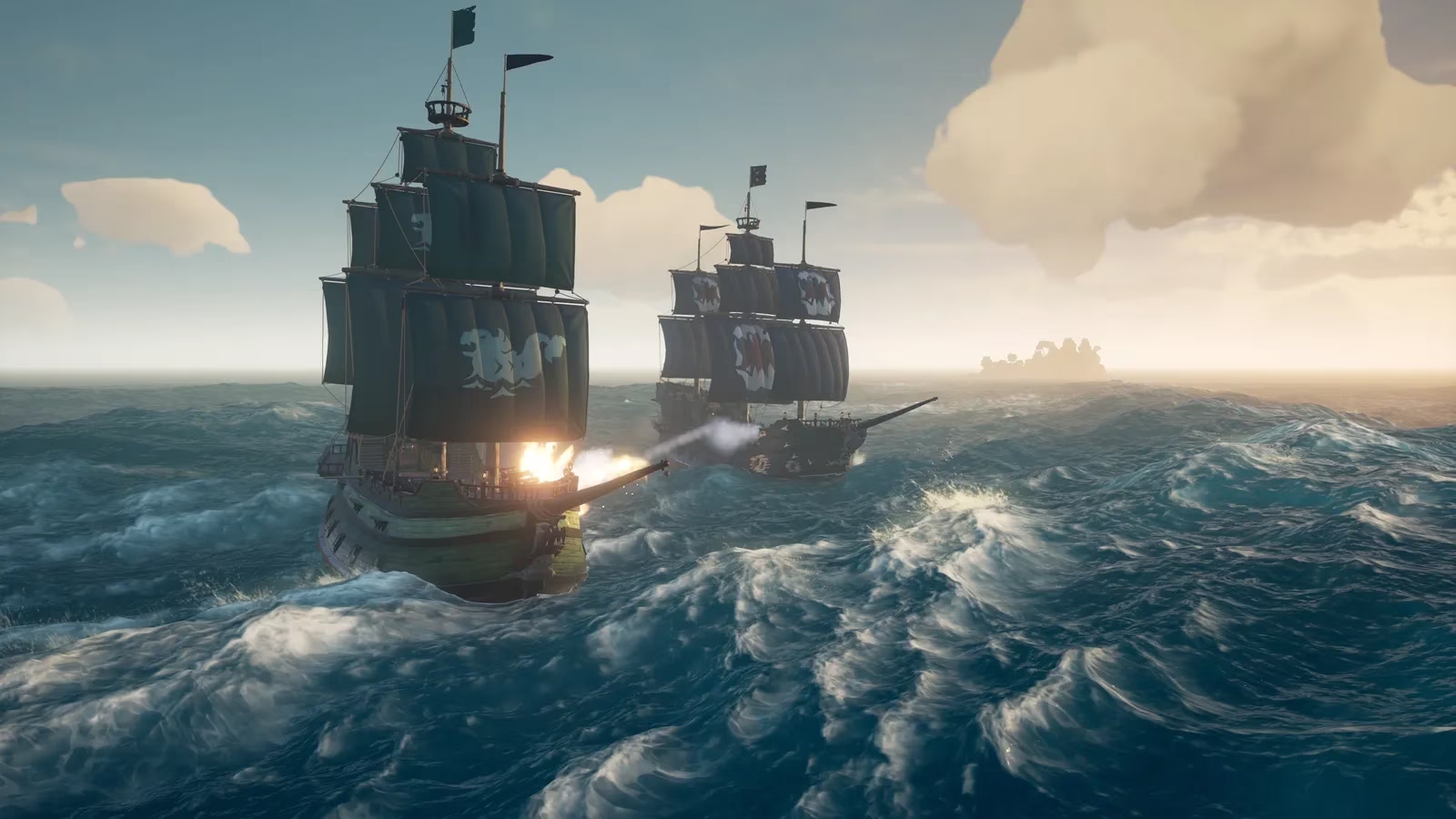
In 2026, the sea still remembers the question Rare posed years earlier: what does a pirate do when no crew answers the call? The studio’s shared-world adventure Sea of Thieves had already invited players to sail together, but a video released long before the game’s later expansions turned its lens on the lone wolf and the two-person crew. Executive Producer Joe Neate introduced the feature, then handed the conversation to Senior Designers Shelley and Andrew Preston. Their tone was not defensive. It was curious. They spoke about solo play as a real path through the game, not a temporary holding pattern for players waiting for friends to log on. For anyone who listened closely, the discussion became a small story about freedom, risk, and the strange rewards of choosing a smaller crew.
The video’s structure was simple, almost intimate. Neate set the stage, and the two designers explained how a solo player might experience the world. They acknowledged the obvious: a single pirate facing a coordinated group is in danger. That danger was not treated as a flaw to be patched away. It was treated as part of the texture. The designers admitted that taking on a group all by oneself may be very challenging, but they also pointed out that success feels rewarding. That sentence carried weight. It suggested that Sea of Thieves was not only about victory. It was about the story a player tells after a risky voyage, whether the ship returns to port or sinks beneath a storm.
The conversation also opened a door between solo and group play. A player who starts alone might eventually try a sloop with a friend. The two-person ship became a bridge: small enough to feel personal, large enough to share the work. One player steers, another trims the sails. One watches the horizon, another guards the hold. The designers framed this progression gently. There was no pressure to abandon the solo life. Instead, the duo experience looked like an invitation to test the water with someone trusted. 🌊
That approach gave the video an unusual tone. It was more of an explanation than a roadmap. It did not address future content that may or may not be implemented for lone wolves. It did not promise a solo campaign or a private paradise. It simply asked players to imagine what a smaller crew could do inside a world built for shared adventure. For some, that was enough. The sloop became a classroom for communication. The solo voyage became a test of nerve. The duo run became a story about trust. ⚓
| Play style | Crew size | Core appeal | Main tension |
|---|---|---|---|
| Solo | One | Total freedom and quiet ownership of the voyage | Every mistake lands on one pair of hands |
| Duo | Two | Shared decisions without a crowd | Coordination can make or break the run |
| Larger crew | Three or more | Chaos, roles, and collective spectacle | A single weak link can sink the mood |
By 2026, the conversation feels almost prophetic. Sea of Thieves has grown into a persistent sandbox, and players still debate whether solo sailing is brave or foolish. The original video did not settle that debate. It gave it language. It treated the lone wolf with respect, and it treated the duo as a natural next step rather than a compromise. At the time, the game was available on Xbox One and Windows 10. In 2026, that detail reads like a snapshot of an earlier era, but the design question remains fresh: how does a shared world stay welcoming to the player who wants to sail alone?
Rare’s answer, at least in that video, was not to remove risk. It was to let risk mean something. A solo pirate could still succeed. A duo could still fail. The sea did not care about crew size. It cared about preparation, timing, and nerve. That idea gave the game a kind of storytelling gravity. It also gave players permission to choose their own scale of adventure. Some would chase fleets. Some would chase quiet sunsets. Some would begin alone and end up on a sloop with a friend, learning that two hands can be enough when the wind is right. 🏴☠️
The video did not need to promise the future. It only needed to explain the present. In doing so, it captured something that still matters in 2026: a game about pirates is also a game about people deciding how much company they want on the water. The solo player is not an afterthought. The duo is not a lesser crew. They are part of the same story, told at different volumes.