
The high seas of video gaming have long been a coveted territory for developers, with players yearning for the ultimate digital pirate fantasy. For years, titles like Sid Meier's Pirates! and LEGO Pirates of the Caribbean set the standard, but the modern era demanded more—a truly expansive, living world of maritime adventure. In 2013, Assassin's Creed 4: Black Flag raised the bar to unprecedented heights, leaving fans wondering: what could possibly come next to capture that magic? Over a decade later, the answer arrived in two very different vessels: the long-delayed Skull and Bones and the veteran Sea of Thieves, setting the stage for a dramatic clash on the virtual waves.
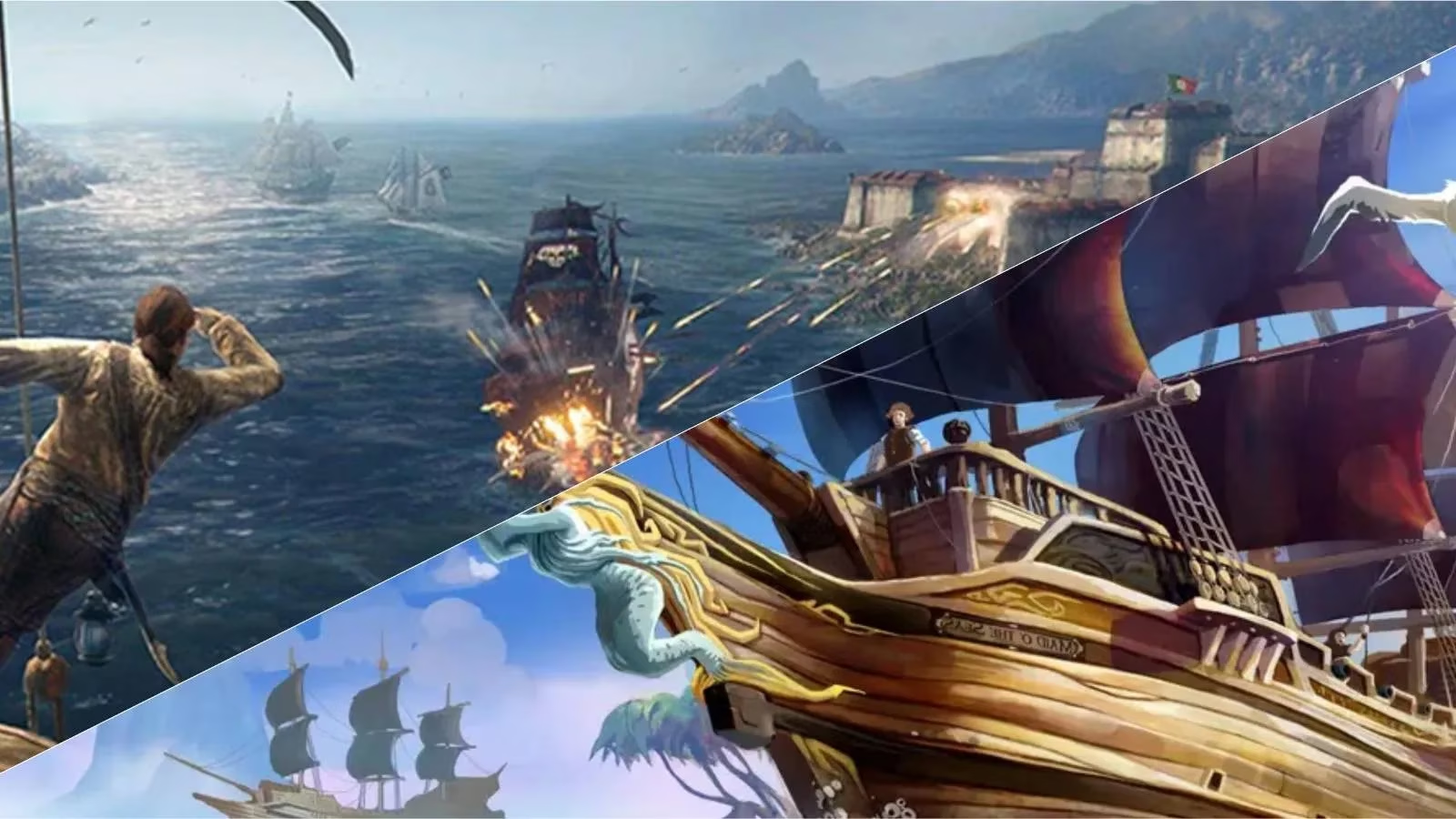
The Troubled Voyage of Skull and Bones
The story of Skull and Bones is a saga of ambition, reinvention, and ultimately, unmet expectations. Its development began in 2013, born directly from the success of Assassin's Creed 4: Black Flag. Ubisoft, eager to capitalize, initiated an MMO spin-off initially titled Black Flag Infinite. However, as technology evolved, this original vision became unfeasible. The project was radically transformed into a standalone title, unveiled to the world in 2017 as Skull and Bones—promising a shared-world, team-based multiplayer pirate experience. What followed was a cycle of significant delays, each one reshaping the game's identity. After over a decade in development, Skull and Bones finally launched, but its reception was far from the triumphant arrival Ubisoft had hoped for. With a disappointing Metacritic score of 57 and lackluster early sales, critics and players alike questioned if the lengthy wait was justified. The game was criticized for feeling dated, lacking the depth and immersive freedom that defines a modern live-service title. Could a seasonal content approach salvage its voyage, or was it destined to be lost at sea?
Sea of Thieves: The Veteran Captain
In stark contrast, Rare's Sea of Thieves set sail much earlier, in 2018, and delivered precisely the shared PvPvE pirate world that Skull and Bones had initially promised. For six years, it cultivated a dedicated community, refining its formula of cooperative sailing, treasure hunting, and emergent storytelling. Its strength lies not in complex progression systems, but in the unforgettable stories created by players—the chaotic naval battles, the last-minute escapes, and the camaraderie (or betrayal) among crews. By the time Skull and Bones launched, Sea of Thieves was already a polished, content-rich experience. But in 2024, it made a strategic move that would redefine the competition: it announced its arrival on PlayStation 5. This expansion beyond the Xbox and PC ecosystem meant it was poised to capture a massive new audience, directly challenging Skull and Bones on its own release window.
The Head-to-Head Comparison
When placed side-by-side, the differences between these two pirate adventures are profound. They represent two distinct philosophies in modern game design.
| Feature | Skull and Bones | Sea of Thieves |
|---|---|---|
| Core Focus | Ship-centric combat & crafting progression | Player-driven stories & social sandbox |
| Progression | Defined gear & ship upgrade paths | Cosmetic-focused; skill-based advancement |
| Atmosphere | Gritty, more realistic aesthetic | Stylized, colorful, and whimsical |
| Launch State | Underwhelming, content-light | Mature, with years of substantial updates |
| Critical Reception | Mixed-to-negative (Metascore ~57) | Positive, with strong community support |
Why did Sea of Thieves succeed where Skull and Bones struggled? The answer may lie in execution and vision. Sea of Thieves understood that the joy of piracy comes from shared, unscripted moments with others. Its systems are tools for creating stories. Skull and Bones, by many accounts, focused more on a traditional grind-based loot loop centered on the ships themselves, which left the player's personal fantasy and world interaction feeling secondary.
The Current State of Play (2026)
As of 2026, the landscape has solidified. Sea of Thieves' multiplatform release proved to be a masterstroke, introducing the game to millions of new players on PlayStation and cementing its status as the definitive social pirate game. Its consistent seasonal updates, major expansions, and vibrant community events have kept it relevant and growing. Skull and Bones, meanwhile, has continued to update through its seasonal model. While it has found a niche audience appreciative of its specific naval combat focus, it has not achieved the broad cultural impact or player numbers of its rival. The buzz from its launch has long since faded, while Sea of Thieves continues to be a regular topic in gaming conversations. The question is no longer about which game will "win," but rather which experience suits a player's desire: a structured, progression-driven naval sim or an open-ended, social adventure where the journey is the destination.
The Legacy of Pirate Games
This rivalry highlights a crucial lesson for live-service gaming: a strong technical launch is important, but a compelling core fantasy and social heart are what ensure longevity. Sea of Thieves captured the chaotic, unpredictable spirit of piracy—the very essence that films and books glorify. Skull and Bones, for all its graphical fidelity and detailed ship mechanics, arguably missed that emotional core for many players. As we look to the future, will another developer dare to chart a new course in this genre? Perhaps the next great pirate game will learn from both titles, merging the deep customization and progression of one with the boundless social freedom and emergent storytelling of the other. Until then, the Jolly Roger of Sea of Thieves flies highest over the digital seas, a testament to the power of a vision that puts player-created fun above all else. ⚓🏴☠️