
Sailing the seas alone in Sea of Thieves is a true test of multitasking. There’s no friendly face to take the wheel while you dash below deck, no lookout calling hazards, and certainly no one to help when you need to bring your vessel to a graceful stop. In 2026, with the game more rich than ever thanks to years of updates—new harpoon mechanics, expanded outposts, and weather effects—mastering the art of parking your ship without crashing has become even more essential for survival.
Whether you’re a fresh swabbie or a seasoned solo slooper, learning to anchor and position your boat precisely can save you from embarrassing beach landings, costly hull repairs, and those moments when your ship simply drifts away while you’re off chasing treasure. The following techniques will transform you from a panicked crasher into a parking virtuoso.
Choosing Your Spot Before You Arrive
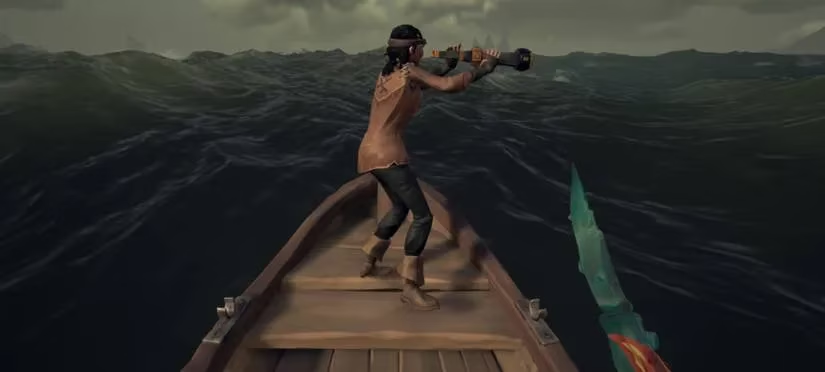
Great parking begins long before your hull ever touches the shallows. As you slice through the waves, keep a spyglass handy and start scanning the horizon the moment you spot your target island. The game gives you a clear audio and visual cue—a change in music and an island name banner—when you enter range, but by then it’s already time to commit. Decide early whether you’ll aim for a dock, a sandy beach, or a rocky outcropping. Look for sheltered coves that hide your ship from other players’ sightlines, and note the direction of the wind; if you need to make a quick getaway later, parking nose‑out towards open water can be a lifesaver.
Many solo players swear by the “dry dock” approach on larger islands: identify a spot where the ship can sit parallel to the shore, with the boarding ladder hanging over deep enough water to avoid scraping the hull. Using your spyglass to assess depth and obstacles allows you to pick a viable touchdown zone without any last‑second scrambling.
Taming Your Speed with the Sails
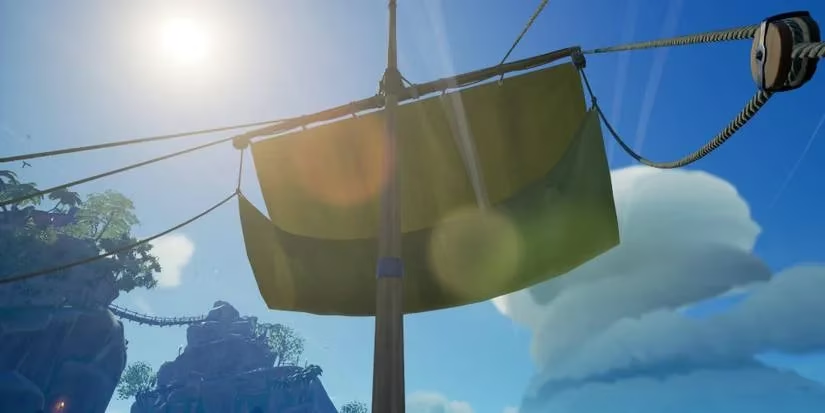
The number one mistake novice solo pirates make is treating the sail controls like an on/off switch. In reality, sails are your primary speed regulator. When you’re barreling toward an island at full billow, even a perfectly timed anchor drop will send your ship into a wild spin—or worse, slam you sideways into a rock. The trick is to stage your slowdown. As soon as the island name banner appears on your screen, raise all sails to about half‑mast. Your momentum will carry you forward, but the deceleration is immediate and dramatic. If you’re piloting a sloop, you can even angle the sail against the wind briefly to bleed off extra speed.
Once the island details become sharp and clear, raise sails all the way. The ship will now coast like a leaf on still water—still moving, but barely. From this point you can make fine steering adjustments without fighting the wind’s push. Pro tip: if you notice you’re still coming in a little hot, a quick sharp turn away from the island and back acts like a hydrodynamic brake, scrubbing off those last few knots.
The Anchor: Your Emergency Brake, Not Your Default
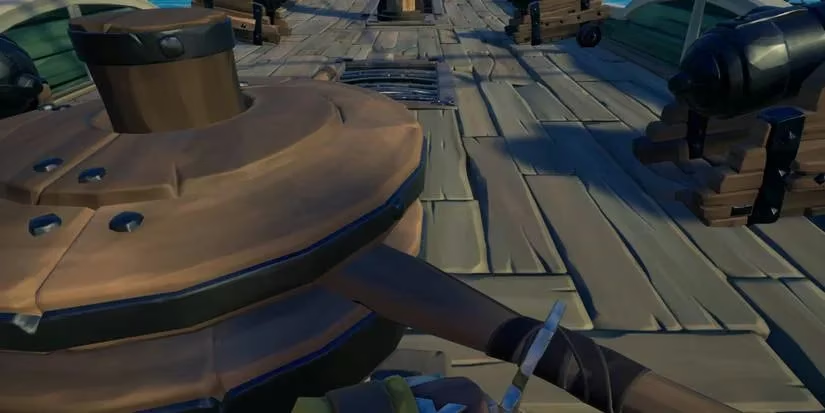
Think of the anchor as a precision tool, not a parking button. Dropping it at full speed is a recipe for disaster—the ship lurches, the stern kicks out, and you’ll likely end up facing the exact direction you didn’t want. Instead, use a technique seasoned solo sailors call the “controlled drop.” As you coast beside the dock (or your chosen shoreline), interact with the capstan to start lowering the anchor but immediately grab the handles. This arrests the drop halfway, allowing you to slow the release and micro‑adjust your position. When your ship finally floats into the sweet spot, let go and watch the anchor bite.
This method works beautifully when you’re alone, but it’s even smoother if you combine it with a last‑second steering nudge. As the anchor chain rattles, give the wheel a gentle quarter‑turn to swing the bow or stern closer to that perfect parallel alignment. Practice on quiet outposts like Golden Sands or Dagger Tooth until the rhythm becomes muscle memory.
Harpoon Finesse for Pinpoint Parking
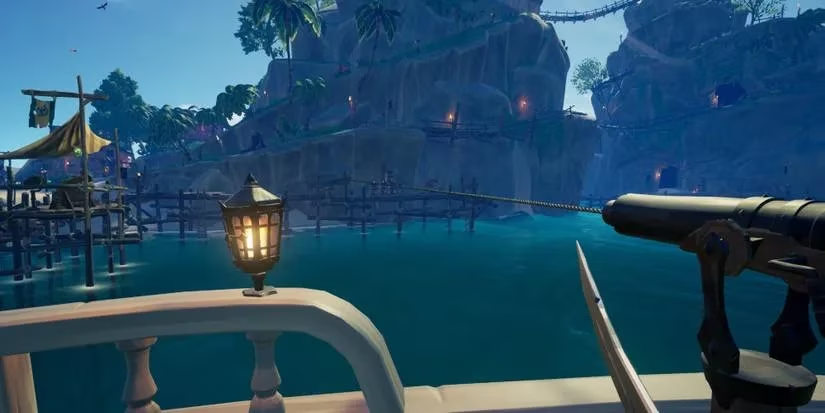
In 2026, after several updates that refined hitboxes and line tension, the harpoon is an indispensable ally for the solo pirate. While coasting at a snail’s pace with sails fully up, aim the harpoon at any solid object—a dock pylon, a large rock, even the sandy ground of a beach. Fire and hold. The line will gently reel your ship toward the target, giving you centimeter‑level control that simply isn’t possible with the wheel alone. You can nudge the bow sideways to avoid a protruding rock, or pull yourself flush against a pier so your boarding ladder swings invitingly close to the shore.
A popular advanced trick is to harpoon a distant object while simultaneously beginning to lower the anchor in a controlled drop. The dual action cancels out any unwanted drifting and locks you into place the moment you’re satisfied with the alignment. Just remember to retract the harpoon after anchoring—leaving it attached can cause weird physics hiccups if the object despawns or another ship collides with yours.
Quick‑Exit Parking for High‑Risk Situations
Parking isn’t just about arriving; it’s about setting up your departure. When you’re on a high‑traffic island or carrying a valuable haul, consider parking with the bow facing out to sea and the anchor raised—yes, raised—once you’ve come to a floating stop. The ship will drift ever so slightly, so you’ll need to keep a sharp eye on its position, but the payoff is massive: if danger appears (a galleon on the horizon, a skelly ship emerging), you can simply drop sails and escape in seconds. To pull this off, use the harpoon to tether yourself lightly to a rock or dock, keeping the ship from wandering too far while still allowing instant mobility. Just be ready to cut the line and run!
Another habit worth cultivating is parking with the cannon angle in mind. Position your ship so that at least one cannon has a clear arc over the island’s main approach path. This turns your parked vessel into a defensive turret if needed—especially useful when a rival crew decides to contest your treasure.
Weather, Darkness, and Other Factors
With Sea of Thieves’ evolving world, 2026 solo players must also contend with fog banks, heavy storms, and even the new moonless nights that can make an outpost practically invisible. In low visibility, rely on your compass and the shape of the island silhouette against the sky. Reduce speed earlier than normal, and use the harpoon to feel your way along rocks like a blind man’s cane. Storms, meanwhile, toss your ship unpredictably; anchor droppers beware—a sudden swell can shove you right onto the beach. In these conditions, it’s often safer to circle the island once and look for a leeward side where wind and waves are blocked.
Mastering the solo park transforms Sea of Thieves from a chaotic scramble into a smooth, professional operation. Every island becomes an opportunity to show off your seamanship. So next time you’re careening toward Plunder Outpost with a deck full of loot, breathe easy, raise those sails, and let the harpoon guide you home.